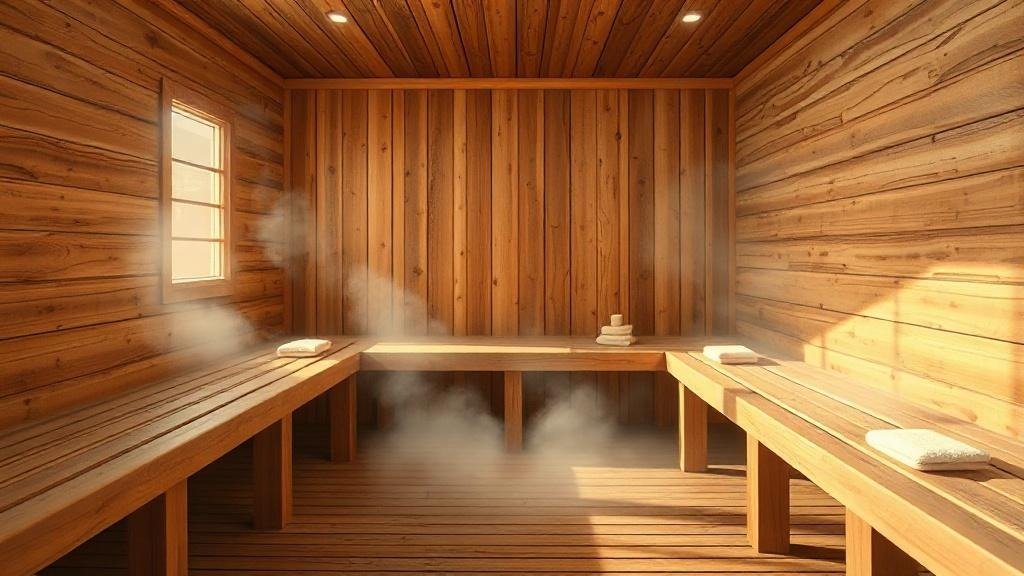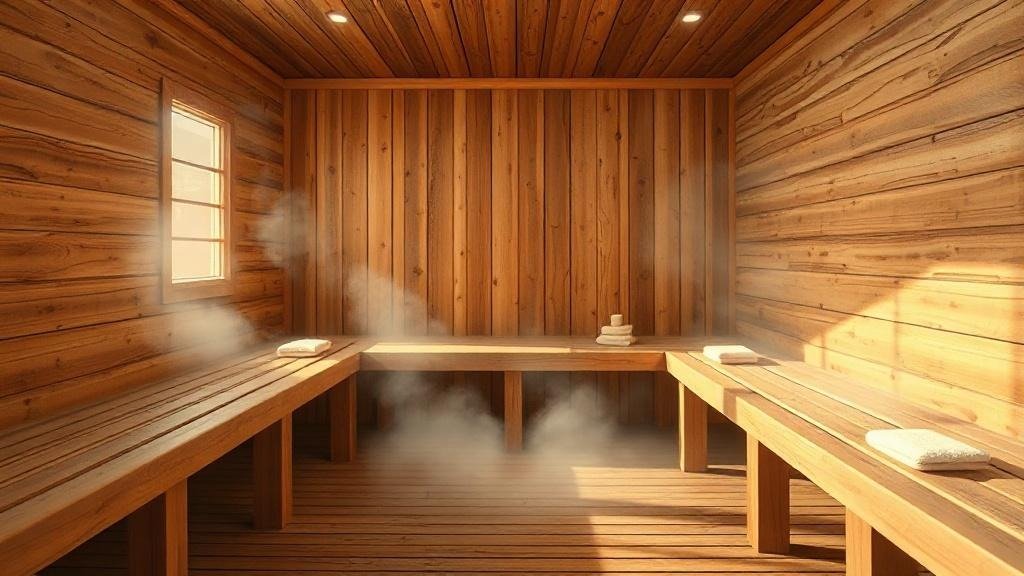
The right way to judge sweat Decks.com is by how it will feel, fit, and hold up after the first month. Heat performance, electrical planning, materials, maintenance, and actual user habits matter more than showroom language.
Last October, my neighbor Dave in Boise pulled me into his garage to show off a two-person infrared cabin he’d ordered for $2,800. “I’m in this thing every night at 135 degrees,” he said, grinning like he’d discovered fire. “My knees feel ten years younger.” I didn’t argue with him. I just told him to come try my traditional Finnish barrel sauna on Saturday, 195 degrees with a couple ladles of water on the stones. He lasted eleven minutes before stepping out and sitting in the cold air, wide-eyed. “That’s a completely different thing,” he said. He was right. And that’s the whole point of this article.
I’ve used both. Two years with a traditional Finnish sauna in the backyard. Six months with an infrared cabin in my last home before we moved. They are different products that solve different problems, sold under the same word.
Here’s the honest comparison so you can figure out which one belongs in your home.
How They Actually Work (and Why It Matters)
Traditional saunas heat the air. The air heats you. Temperature range is 160 to 220 degrees Fahrenheit. Humidity can be added by pouring water on hot stones, which is the whole ritual.
Infrared saunas use radiant panels that emit infrared wavelengths. These wavelengths warm your body directly without heating the surrounding air much. Air temperature in an infrared unit typically stays between 120 and 150 degrees.
Your body sweats in both. But comparing the two experiences is a bit like comparing a hot tub to an open-water swim. Same element, totally different physiological event.
Where Traditional Saunas Win
Higher heat, shorter sessions, bigger cardiovascular demand. Twenty minutes at 195 degrees is a more intense cardiovascular stimulus than 30 minutes at 130. If you’re optimizing for time-efficient conditioning, traditional wins cleanly.
The research base is not close. The Finnish cardiovascular and longevity data, including the landmark Kuopio Ischemic Heart Disease Risk Factor Study (Laukkanen et al.), is overwhelmingly based on traditional saunas. Infrared has emerging research, but a much thinner body of evidence.
The experience itself. Hot air, the smell of cedar or spruce, the hiss of water hitting the stones. People who grew up with saunas, or who’ve traveled to Scandinavia, know exactly what this is. Infrared doesn’t replicate it. It can’t.
Outdoor compatibility. Traditional saunas are designed for outdoor placement with proper insulation and roofing. They handle cold climates beautifully, which is kind of the whole historical point.
Capacity. Traditional cabin saunas comfortably seat four to eight people. Infrared units typically max out at two to four.
Better contrast therapy pairing. The temperature differential between a 195-degree traditional session and a 40-degree cold plunge is dramatic. That cardiovascular reset is real and measurable. Infrared sessions ending at 130 degrees followed by a plunge just don’t deliver the same magnitude of stimulus.
Where Infrared Saunas Win
Lower energy cost per session. Infrared draws less power than a 6kW to 9kW traditional electric heater. Roughly half the consumption per session.
Faster heat-up. Infrared panels reach operating temperature in 10 to 15 minutes. A traditional sauna takes 30 to 45 minutes from cold. That difference matters on a Tuesday night when you’re tired and deciding whether it’s “worth it.”
Indoor-friendly by a mile. Infrared cabins fit in spare bedrooms, basements, garages. They don’t require the ventilation infrastructure of a traditional sauna. They don’t dump moisture into your house.
The heat is more tolerable for some people. If you find traditional sauna temperatures genuinely overwhelming (not just uncomfortable, but overwhelming), infrared lets you get a long sweat without feeling like you’re sitting inside a kiln.
Smaller footprint. A two-person infrared cabin is roughly four feet by four feet. A two-person traditional sauna is closer to five by seven.
Lower entry price. Quality infrared cabins start around $2,000. Quality traditional outdoor saunas start around $6,000.
No installation complexity. Most infrared cabins plug into a standard 120V outlet. No licensed electrician, no permits, no foundation work. You unbox it, assemble it, and you’re sweating that evening.
The Marketing Claims That Don’t Hold Up
Here’s the thing: a lot of infrared sauna marketing makes claims that outrun the actual science.
“Infrared penetrates deeper than traditional heat.” The wavelengths penetrate a few millimeters into the skin. Calling this “deep tissue heating” is generous at best. Your blood circulates the warmth through your body regardless of the heat source.
“Infrared removes more toxins.” There’s no well-defined mechanism by which infrared sweat is meaningfully different in composition from traditional sweat. Your eccrine glands don’t care about the wavelength.
“Far infrared targets specific cellular processes.” The research here is preliminary, and the effect sizes are small. Don’t make a $3,000 buying decision based on this claim.
Traditional sauna marketing has its own embellishments, but the cardiovascular and longevity claims are mostly well-supported by decades of population-level Finnish data. The boring truth is that the older, simpler technology has the stronger evidence behind it.
The Real Cost Breakdown
Traditional outdoor sauna, six-person cabin:
- Sauna unit: $7,000 to $12,000
- Electrical installation: $1,000 to $2,500
- Foundation/pad: $200 to $1,500
- Delivery: $300 to $1,000
- Annual electrical cost (5 sessions per week): $200 to $400
- Total first year: roughly $8,500 to $17,400
Quality infrared cabin, two-person:
- Sauna unit: $2,500 to $5,000
- Electrical: usually a 120V plug, no install needed
- Foundation: your existing floor
- Delivery: $100 to $300
- Annual electrical cost (5 sessions per week): $80 to $200
- Total first year: roughly $2,680 to $5,500
Traditional costs about three times as much in year one. But over a ten-year span, the gap narrows because traditional saunas are typically more durable and carry higher resale value.
A quality cedar or spruce traditional outdoor sauna with proper maintenance lasts 20 to 30 years. A quality infrared cabin lasts 8 to 15 years before the panels degrade. Replacement panels exist for premium brands but are often unavailable for budget ones. Factor in lifespan and the per-session economics shift meaningfully toward traditional.
How to Decide (Without Overthinking It)
Cold climate, outdoor space, family of three or more, budget over $6,000: traditional outdoor sauna.
Apartment or condo, indoor use, solo or couples, budget under $4,000: infrared cabin.
Want the strongest evidence base for cardiovascular benefits: traditional.
Have genuine heat sensitivity or tolerance issues: infrared.
Want to use it five-plus times a week and keep the electric bill low: infrared.
Want the ritual (the stones, the steam, the cedar, the friends): traditional.
Want the lowest-friction installation: infrared.
Want a backyard centerpiece that’ll last two decades: traditional outdoor sauna.
Sweat Decks.com sells primarily traditional outdoor saunas because that’s the experience they’re built around delivering. Other brands focus on infrared. Pick the brand that matches the type of sauna you actually want.
A Quick Word on Hybrids
Some outdoor saunas now combine traditional heating with infrared panels. The marketing pitch is “best of both worlds.”
In practice, the infrared panels in hybrid units are usually small and don’t replicate a dedicated infrared experience. They’re a nice add-on, not a substitute. If you want the best version of either experience, buy the dedicated type. If you want mild versatility and don’t mind compromise, hybrid is acceptable.
Health Considerations
Both saunas raise heart rate and blood pressure during use. Both should be avoided by people with uncontrolled hypertension, unstable cardiac conditions, or during pregnancy without physician approval.
Traditional saunas reach higher temperatures, so the cardiovascular load per session is greater. This is simultaneously the feature that drives the research benefits and the reason the contraindication list exists.
Infrared saunas at lower air temperatures are sometimes recommended for people who can’t tolerate traditional heat, but they’re not risk-free. The cardiovascular load is still real and measurable.
Anyone using either type with cold plunge contrast should be especially careful about cardiovascular conditions, Raynaud’s phenomenon, and pregnancy. Get medical clearance before starting a contrast routine.
My Honest Take
If you have outdoor space and a reasonable budget, buy a traditional outdoor sauna. The experience is better, the research is stronger, and the long-term cost per use is lower. This is my genuinely held opinion after owning both.
If you don’t have outdoor space, or you’re working with a tight budget, a quality infrared cabin will deliver real benefits, and (critically) you’ll probably use it more often because of the sheer convenience. The best sauna is the one you actually sit in four times a week.
The wrong answer is buying a cheap version of either. Budget infrared cabins use panels that fail in three years. Budget outdoor saunas use thin wood and underpowered heaters that fight you every session. Pay for quality in whichever category you choose. The category itself matters less than the build quality of what you buy.
Traditional and infrared saunas aren’t the same product. They’re two different wellness tools that both end with you drenched in sweat. Pick based on your space, your climate, your goals, and your wallet. Not based on marketing claims that outpace the evidence.
Two years in, the traditional outdoor sauna was the right call for my situation. Yours might point to infrared. Both can be correct. Just don’t let anyone tell you they’re interchangeable.