Real Cost of an Aging HVAC System
At some point, every homeowner will have to ask themselves whether they should fix their existing HVAC system or replace it completely. On the surface, it appears that repairs are less expensive. However, with repeated service calls, rising energy costs, and performance degradation over time, an older unit can end up costing much more than anticipated.
The lifespan of an average residential HVAC system is 12 to 18 years, depending on maintenance, climate, and usage. Heating and cooling systems consume almost half of the energy in a home, according to the U.S. Department of Energy. This translates to an inefficient system not only compromising comfort but also your monthly costs.
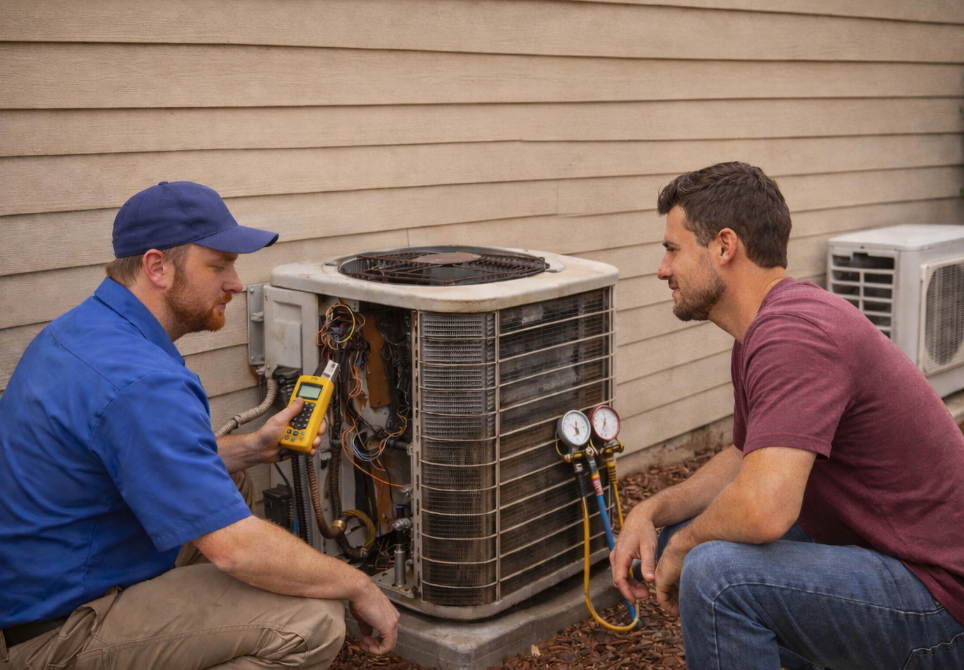
When your unit is prone to breakdowns during the summer months, you might want to consider hiring professional AC repair services in Campbell to get your unit back up and running for the short term. Issues such as dirty coils, thermostat failure, or damaged capacitors can often be fixed without a complete replacement.
But homeowners should also consider the frequency of repairs. If you have to make several big repairs to your HVAC system in a year, it might be better to invest in a new system.
Signs Your HVAC System Can Still Be Repaired
Not all problems are permanent. In many instances, repairs are both feasible and economical, particularly for units less than 10 years old. Leaks in the minor refrigerants, blocked drain lines, malfunctioning sensors, or broken fan motors can typically be repaired without a significant disruption.
Another key consideration is energy efficiency. When your bills are not that much different from month to month and your system is still cooling or heating the house evenly, repair is usually a good financial choice. A qualified HVAC technician can assess the performance of the airflow, pressure of the refrigerant, and the wear of the components to determine if the system has a good service life left.
Any unusual sounds should also be considered. Mechanical stress can be indicated by banging, grinding or buzzing sounds. Identifying these problems early can save much more costly damage later on.
See also: How Climate, Codes, and Consumption Shape Home Solar Decisions
When Replacement Becomes the Better Financial Decision
At some stage, repairs become uneconomical. The rule of thumb is to replace if the cost of repair is more than 30-40% of the cost of a new system. Older systems also consume much more electricity than modern high-efficiency systems.
New HVAC systems can save up to 20-40% of energy, particularly when replacing old systems with ENERGY STAR equipment. Better airflow technology, smart thermostat compatibility and variable-speed compressors offer greater indoor comfort and reduced operating costs.
Another big red flag is if your home is hot in some areas and cold in others. If some rooms are still hot and others are cooling as expected, the system might be having trouble maintaining capacity.
Why Professional Installation Matters
Even the most sophisticated HVAC systems can fail to function properly if they are not installed properly. If the system is not sized correctly, ductwork is not designed properly, or there is an imbalance in airflow, efficiency and lifespan can be drastically shortened.
This is why many homeowners looking for AC installation in San Jose, CA, services tend to look for experienced contractors who have a good understanding of installation and diagnostic skills. When installed correctly, the system is sized to match the home’s square footage, insulation and airflow.
Advanced efficiency features are also included in modern systems, and these features must be professionally calibrated. Variable-speed technology, zoning systems and smart thermostats are best when set up properly from the beginning.
Making the Right Decision for Long-Term Comfort
Deciding whether to repair or replace an HVAC system is not always easy. The best choice will depend on the system’s age, repair history, energy efficiency, and performance. A newer system that has a minor problem might just require a simple repair, whereas an older system that has frequent problems may be costing you money season after season.
The secret is to act before a complete breakdown occurs. By conducting regular inspections, seasonal maintenance, and early diagnostics, homeowners can prevent emergency replacements during harsh weather conditions and enhance long-term comfort and efficiency.