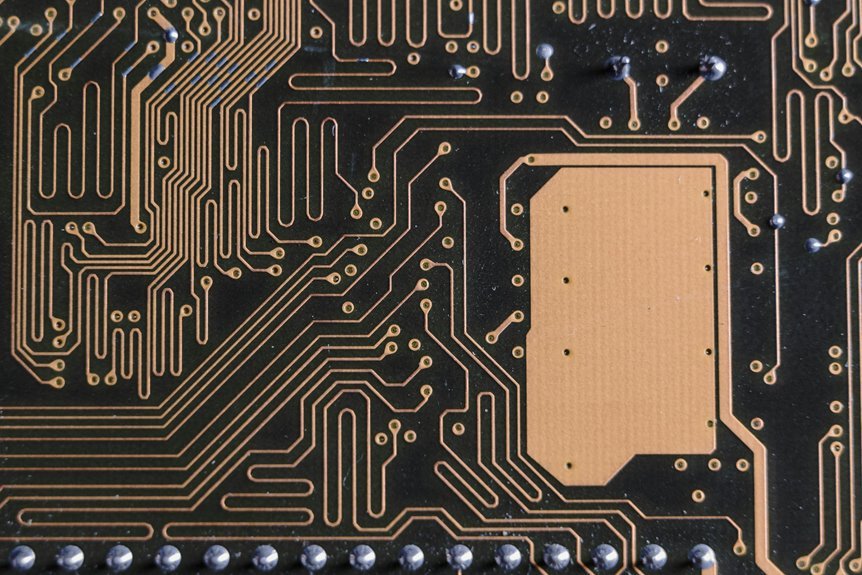
The Signal Integrity Report, encompassing several critical codes, presents an analytical overview of the challenges in maintaining signal quality within contemporary communication systems. It identifies significant factors such as transmission losses and environmental impacts that can degrade performance. Additionally, the report outlines essential best practices for mitigating these issues. Understanding these elements is crucial for professionals seeking to enhance their systems. The implications of these findings warrant further examination.
Overview of Signal Integrity Challenges
What factors contribute to signal integrity challenges in high-speed digital circuits?
Key elements include transmission losses and distortion effects, which significantly degrade signal quality.
As frequencies increase, the impact of these challenges becomes more pronounced, leading to reduced performance and reliability.
Understanding these issues is essential for engineers seeking to design more effective and robust systems that can withstand the complexities of modern digital communications.
Analysis of Key Reports
While various studies have explored the intricacies of signal integrity, a comprehensive analysis of key reports reveals consistent themes and findings that underscore the importance of addressing these challenges.
Report comparisons highlight varying methodologies, while metric evaluations indicate critical parameters affecting performance.
This synthesis not only enhances understanding but also encourages stakeholders to prioritize effective solutions for improved signal integrity across applications.
Factors Affecting Signal Quality
Signal quality is influenced by a multitude of factors, including transmission medium, signal frequency, and environmental conditions.
Effective noise reduction techniques are essential for preserving signal integrity, while proper impedance matching minimizes reflections and signal loss.
Additionally, variations in temperature, humidity, and electromagnetic interference can further degrade performance, underscoring the importance of a holistic approach to maintaining optimal signal quality in any system.
Best Practices for Ensuring Signal Integrity
To maintain optimal signal integrity, implementing best practices throughout the design and installation processes is crucial.
These practices include effective noise reduction techniques, such as utilizing shielding and proper grounding, while ensuring impedance matching to minimize reflections.
Additionally, careful layout design, including trace width and spacing considerations, enhances performance, ultimately enabling reliable communication in high-speed electronic systems and preserving signal fidelity.
Conclusion
In conclusion, the Signal Integrity Report illuminates the nuanced challenges faced in the realm of high-speed digital communications. By embracing the art of impedance matching and the science of noise reduction, engineers can foster a more harmonious environment for signal transmission. This report serves as a guiding beacon, encouraging a thoughtful and meticulous approach to design and layout, ultimately paving the way for enhanced reliability and performance in communication systems.